
Sustainable Building Practices: A New Era for British Construction


Understanding Sustainable Building Practices
The construction industry in the UK is undergoing a transformation as it embraces sustainable building practices. This shift is not only essential for reducing the environmental impact but also for enhancing the quality of life for future generations. Sustainable building practices focus on energy efficiency, resource conservation, and creating healthy environments for occupants.
One of the core principles of sustainable construction is the use of eco-friendly materials. These materials are sourced sustainably, have a low environmental impact, and often contribute to better insulation and energy efficiency. The use of recycled materials, such as reclaimed wood and recycled steel, is becoming more common in British construction projects.
Energy Efficiency and Innovation
Energy efficiency is a cornerstone of sustainable building practices. Modern buildings are designed to minimize energy consumption through advanced insulation, energy-efficient windows, and the integration of renewable energy sources such as solar panels and wind turbines. These innovations not only reduce carbon footprints but also lower utility costs for building owners.
Incorporating smart technology is another trend in sustainable construction. Smart systems can optimize energy use by adjusting lighting, heating, and cooling based on occupancy and weather conditions. This enhances the building's efficiency and provides a more comfortable living or working environment.
Water Conservation Techniques
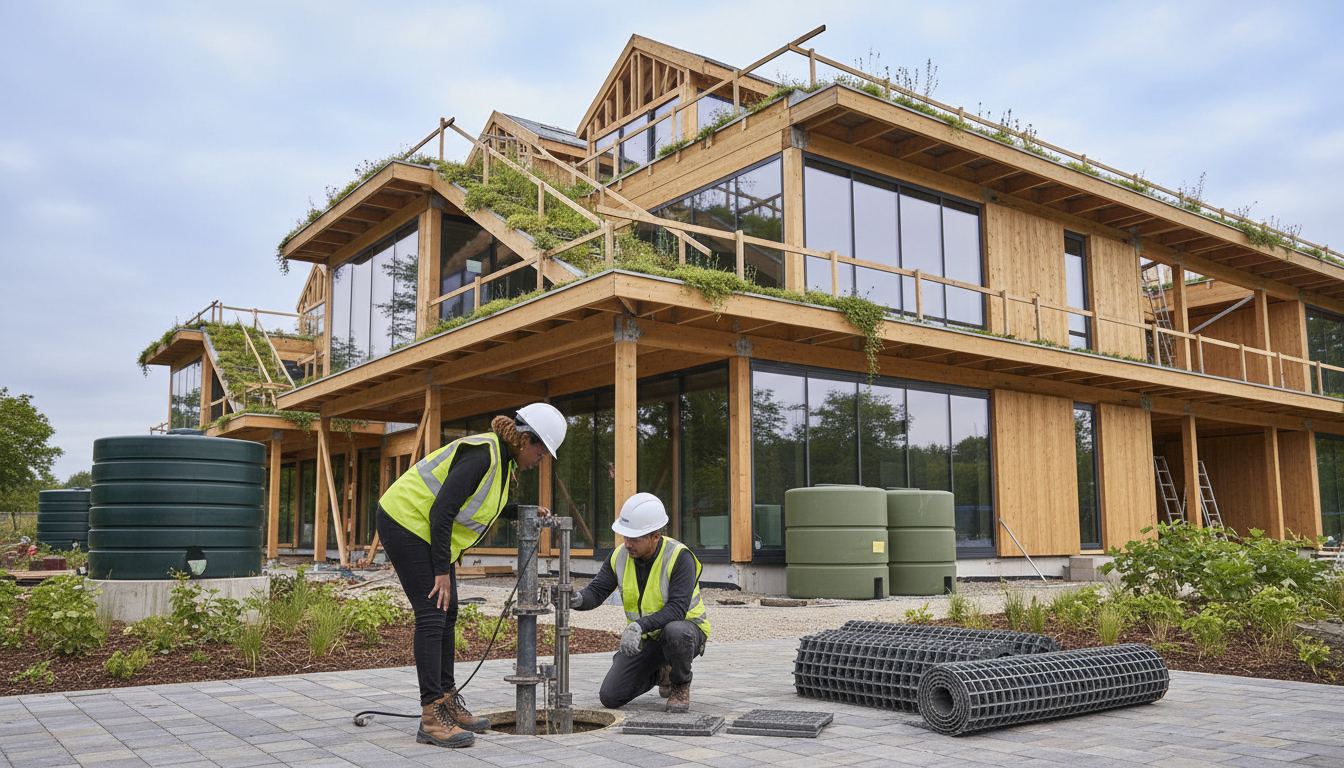
Water conservation is a crucial aspect of sustainable building. Techniques such as rainwater harvesting, greywater recycling, and the installation of low-flow fixtures can significantly reduce water usage. These methods are increasingly being adopted in new construction projects across the UK.

Moreover, sustainable landscaping practices, such as using native plants that require less water and maintenance, are being integrated into building designs. These practices not only conserve water but also enhance biodiversity and create more resilient ecosystems.
The Role of Government and Regulations
The UK government plays a vital role in promoting sustainable building practices through regulations and incentives. Building codes and standards are continually updated to encourage energy efficiency and the use of sustainable materials. Financial incentives, such as tax credits and grants, are available to encourage developers to adopt green building practices.
Collaboration between the government, private sector, and non-profit organizations is essential to drive innovation and make sustainable construction the norm. Public awareness campaigns and educational programs also play a role in promoting sustainable practices among consumers and builders alike.

The Future of Sustainable Construction
As technology advances and awareness of environmental issues increases, the future of sustainable construction in the UK looks promising. Emerging technologies such as 3D printing and modular construction offer new opportunities to reduce waste and improve efficiency. These innovations, combined with a commitment to sustainability, are paving the way for a new era in British construction.
In conclusion, sustainable building practices are reshaping the construction landscape in the UK. By prioritizing energy efficiency, resource conservation, and environmental health, the industry is making significant strides toward a more sustainable future. This transformation not only benefits the environment but also enhances the quality of life for all.